Secure Your
Academic Future
College is when your digital life becomes your professional life. Protect your academic work, financial information, and personal data — and position yourself for a high-demand career in cybersecurity.
The Threat Landscape for College Students
Universities are prime targets for cyberattacks. Research data, financial aid information, and student records are all valuable to criminals. At the same time, college students face unique personal risks — from phishing scams targeting student loan accounts to identity theft that can take years to resolve. The good news is that the cybersecurity skills you build now will serve you for the rest of your career.
5 Cybersecurity Priorities for College Students
Enable MFA on Everything
Multi-Factor Authentication is your single most effective defense. Enable it on your university email, banking, social media, and any account containing sensitive information.
Use a VPN on Campus Wi-Fi
Campus and coffee shop Wi-Fi networks are shared and potentially insecure. A VPN encrypts your traffic, protecting your data from eavesdroppers and man-in-the-middle attacks.
Back Up Your Academic Work
Ransomware attacks on universities are increasing. Back up your thesis, research, and assignments to a cloud service and an external drive. A ransomware attack should never cost you your degree.
Get Certified
Industry certifications like CompTIA Security+, CEH, or CISSP dramatically increase your employability. Many can be earned while still in school and some are free for students.
Apply for Scholarships & Internships
The CyberCorps Scholarship for Service program pays full tuition in exchange for government service. NSA, CISA, and DHS all offer competitive internships for college students.
Common Threats on Campus
Ransomware on University Networks
Ransomware attacks on universities have surged, encrypting research data, student records, and administrative systems. Always back up your work and report suspicious activity to your IT department immediately.
Student Loan Phishing
Scammers send fake emails about student loan forgiveness or FAFSA issues to steal your FSA ID and financial information. Always navigate directly to studentaid.gov rather than clicking email links.
Fake Campus Wi-Fi Hotspots
Attackers set up fake Wi-Fi networks with names like 'CampusWifi_Free' to intercept your traffic. Always verify the official network name with your IT department and use a VPN.
Social Media Account Takeovers
Your social media accounts are a gateway to your personal and professional network. A compromised account can be used for scams, reputation damage, or to access other linked accounts.
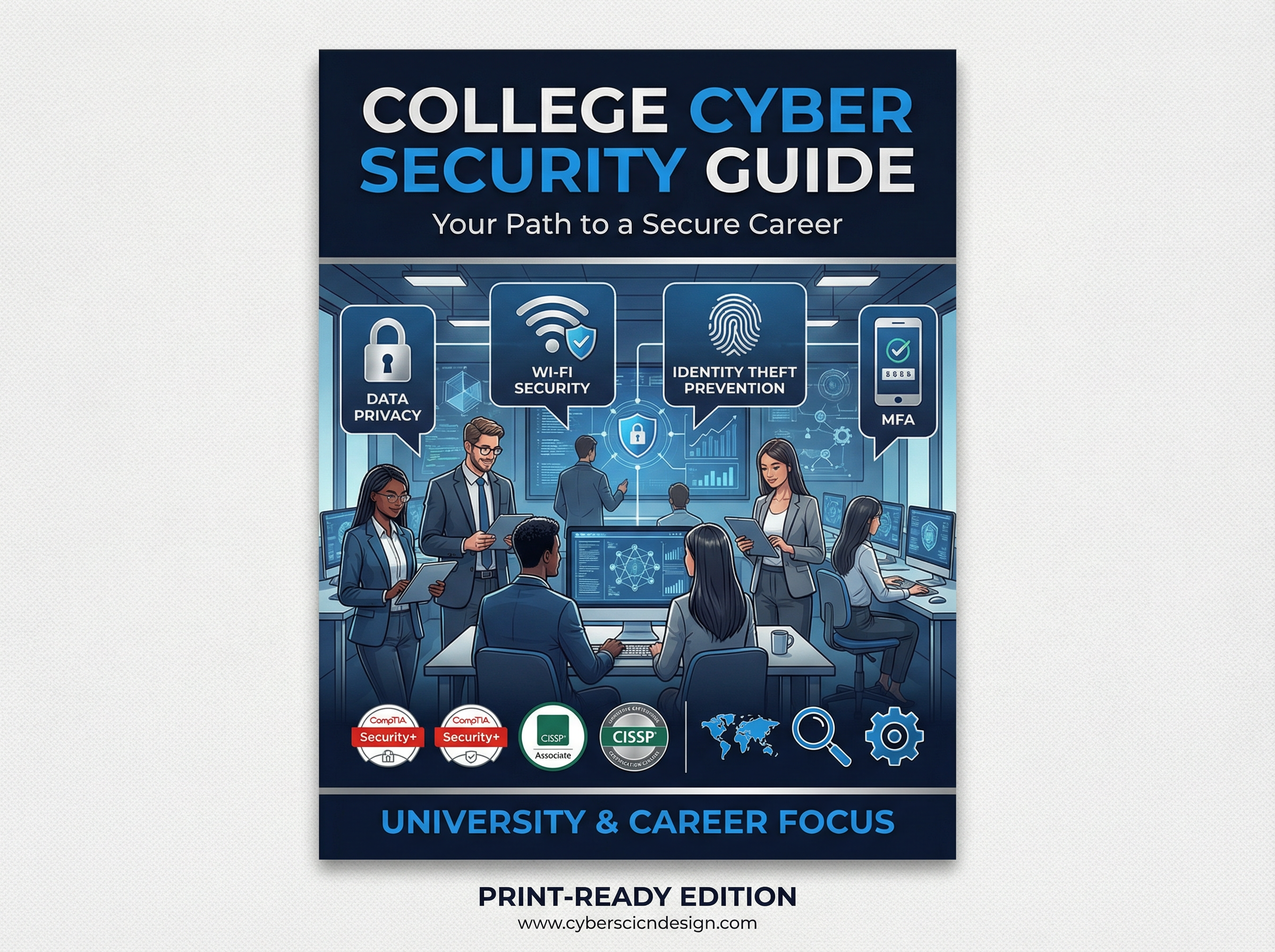
Free Downloadable Handout
Print-ready resource for students and campus organizations.
Scholarships, Internships & Free Resources
CyberCorps: Scholarship for Service
Full tuition scholarships for students who commit to working in federal cybersecurity roles after graduation.
NICCS Education & Training Catalog
Thousands of free and paid cybersecurity training courses and certifications for college students and professionals.
NSA Student Programs
Internship, co-op, and scholarship opportunities at the National Security Agency for college students in STEM fields.
DHS Cybersecurity Student Programs
Internship and fellowship programs at DHS for college students pursuing cybersecurity and related fields.